
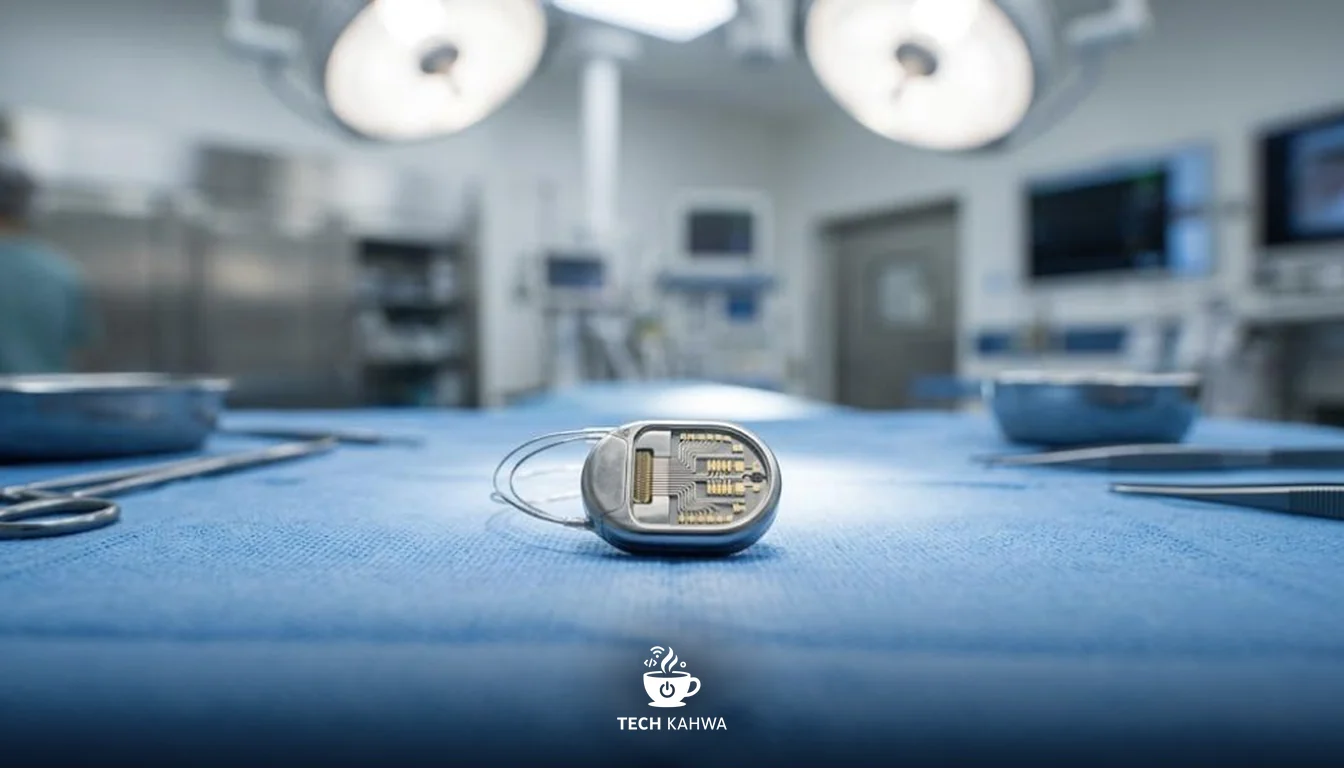
Brain-computer interface company Paradromics said on 20 November that the US Food and Drug Administration has approved an Investigational Device Exemption for its Connect-One Early Feasibility Study. In plain terms, the company now has permission to start testing its Connexus implant in people, with the goal of restoring speech and computer control for people with severe motor impairment. This is approval to begin a trial, not approval to sell the device.
What happened
According to Paradromics’ announcement, the Connect-One study will “evaluate the long-term use of Connexus BCI for its ability to safely restore speech and enable computer control for people with severe motor impairment”. Bloomberg and Nature also reported the clearance.
The study starts small. Paradromics plans to enroll 2 participants at first, across 3 sites: UC Davis, Massachusetts General Hospital and the University of Michigan. The company expects the study to launch in the first quarter of 2026.
The regulatory label matters. An Investigational Device Exemption, as the name suggests, lets a device that is still under investigation be used in a clinical study. An early feasibility study is, as its name also says, an early look at whether an approach can work and can be used safely over time. Neither step means the device has been approved for patients in general.
How it works
A brain-computer interface, or BCI, reads signals from the brain and turns them into commands for a computer. When someone who cannot move or speak tries to form words, their brain still produces activity linked to that attempt. The implant listens to that activity, and software learns to translate patterns into text, speech or cursor movements.
Connexus is a fully implanted system. Paradromics says data is sent wirelessly from a receiver implanted in the chest, rather than through a cable leaving the body. For anyone expected to live with a device for years, that design choice matters.
The figure the company highlights is an information transfer rate of more than 200 bits per second. A useful way to think about bits per second is as the width of a pipe. Speech is fast and dense, and trying to push it through a narrow pipe produces slow, halting output, a bit like typing a message one letter at a time. A wider pipe, in principle, lets more of what the brain is doing get through at once. I want to be clear that the 200 bits per second number is Paradromics’ own stated figure. The trial is where it will be tested in people over the long term.
By the numbers
| Item | Figure | Source |
|---|---|---|
| Regulatory step | FDA Investigational Device Exemption | Paradromics, 20 Nov 2025 |
| Initial participants | 2 | Paradromics, 20 Nov 2025 |
| Clinical sites | 3 (UC Davis, Massachusetts General Hospital, University of Michigan) | Paradromics, 20 Nov 2025 |
| Expected study launch | First quarter of 2026 | Paradromics, 20 Nov 2025 |
| Information transfer rate, company stated | More than 200 bits per second | Paradromics, 20 Nov 2025 |
| Data link | Wireless, from a chest-implanted receiver | Paradromics, 20 Nov 2025 |
Why it matters
What caught my attention is the combination of goals. Many people have heard of brain implants in the context of moving a cursor. Paradromics puts speech first, alongside computer control. For someone who has lost the ability to speak, getting words out is not a convenience feature. It is communication with family and doctors.
This clearance also adds another fully implanted competitor to Neuralink in the race to give people who cannot speak a voice through their thoughts. Competition in this area is healthy in my view. Different teams make different engineering choices, and patients benefit when more than one approach reaches clinical testing.
I also think the scale of the study deserves honest framing. Two participants at the start is a very small number, which is normal for an early feasibility study. The point at this stage is to learn whether the system is safe and usable over the long term, not to prove it works for everyone. Headlines about “mind reading” tend to run ahead of what a first study can show, so I would treat this as the start of the testing phase, nothing more. None of this is medical advice.
What comes next
Paradromics expects the Connect-One study to launch in the first quarter of 2026, with 2 initial participants at UC Davis, Massachusetts General Hospital and the University of Michigan. The questions to watch are the ones the study itself is designed to answer: whether Connexus can safely restore speech and computer control, and whether it holds up over long-term use.
Sources
- Paradromics via Business Wire, “Paradromics Receives FDA Approval for the Connect-One Clinical Study with the Connexus Brain-Computer Interface”, 20 November 2025, https://www.businesswire.com/news/home/20251120141086/en/Paradromics-Receives-FDA-Approval-for-the-Connect-One-Clinical-Study-with-the-Connexus-Brain-Computer-Interface
- Bloomberg, report on Paradromics being cleared to start a brain implant trial, 20 November 2025, https://www.bloomberg.com/news/articles/2025-11-20/neuralink-rival-paradromics-cleared-to-start-brain-implant-trial
- Nature, news report on the Paradromics clearance, November 2025, https://www.nature.com/articles/d41586-025-03849-0