
Europe’s Copernicus climate service says 2025 was the third-warmest year on record, a hair behind 2023 and clearly behind 2024. The more important line comes right after the ranking: the three years from 2023 to 2025 averaged more than 1.5°C above the pre-industrial level, the first time any three-year period has crossed that mark.
What happened
On 14 January 2026 the Copernicus Climate Change Service (C3S) released its Global Climate Highlights, its yearly summary of how the planet’s climate behaved over the previous twelve months. The European Centre for Medium-Range Weather Forecasts (ECMWF) published the same headline figures.
The global average surface air temperature for 2025 came in at 14.97°C. That is 1.47°C above the pre-industrial level. In the ranking, 2025 was 0.13°C cooler than 2024, which remains the warmest year on record, and only 0.01°C cooler than 2023.
That 0.01°C gap is what caught my attention first. For practical purposes, 2023 and 2025 are almost level, and the order between them matters far less than the fact that both sit near the top of the table.
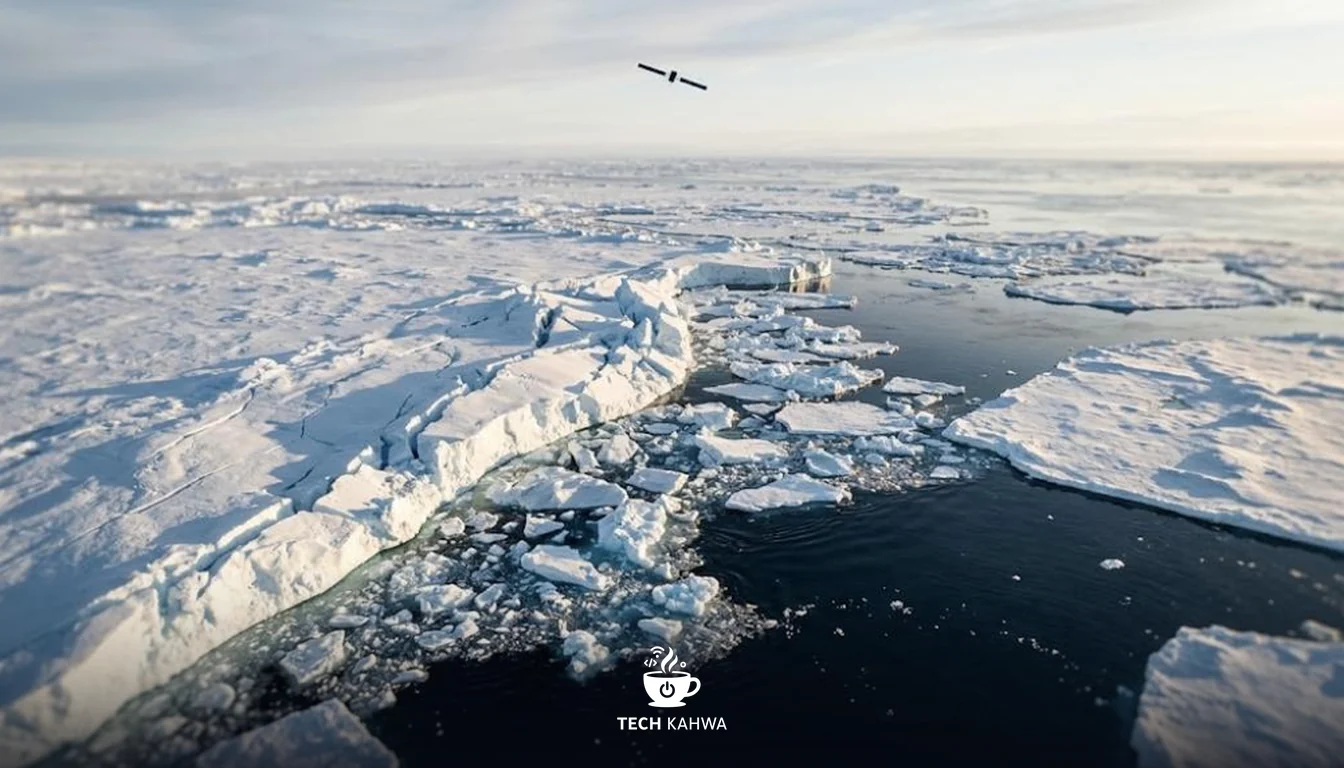
The report also flagged two polar signals. Antarctica recorded its warmest annual temperature on record. And in February 2025, in Copernicus’s words, “the combined sea ice cover from both poles fell to its lowest value since at least the start of satellite observations in the late 1970’s”.
How it works
The headline number is a global average of the air temperature near the surface, over land and sea, across a whole year. On its own, 14.97°C tells you little. What scientists care about is the difference between that average and the pre-industrial level, the baseline before large-scale burning of fossil fuels began. That difference is the 1.47°C in this report.
A useful way to think about it is a patient with a temperature. One high reading on a single morning deserves attention, but a doctor worries more when the reading stays high day after day. The Paris Agreement’s 1.5°C goal works like the second case: it is judged over decades, not over one year or even three. So three years averaging above 1.5°C does not mean the Paris limit has been officially breached. It means the readings have stayed high long enough that the long-term average is getting close.
The sea ice figure comes from a different kind of measurement. Satellites have tracked how much of the polar oceans is covered by ice since the late 1970s, which gives a continuous record long enough to tell a genuine low from ordinary year-to-year swings. Combined with temperature records from satellites and weather stations, it builds a picture that no single instrument could give.
By the numbers
| Item | Figure | Source |
|---|---|---|
| Global average surface air temperature, 2025 | 14.97°C | ECMWF |
| 2025 above pre-industrial level | 1.47°C | ECMWF |
| 2023 to 2025 average | More than 1.5°C above pre-industrial | ECMWF and C3S |
| 2025 compared with 2024 | 0.13°C cooler | Copernicus C3S |
| 2025 compared with 2023 | 0.01°C cooler | Copernicus C3S |
| Combined polar sea ice, February 2025 | Lowest since satellite records began in the late 1970s | Copernicus C3S |
| Antarctica, 2025 | Warmest annual temperature on record | Copernicus C3S |
Why it matters
The honest reading of this report is not “2025 broke a record”, because it did not. It is that the world has now spent three consecutive years above a threshold that governments agreed to try to stay under. A single hot year can be put down to natural swings. Three in a row averaging above 1.5°C is harder to wave away.
In my view, the polar numbers are the part that deserves more public attention. Record warmth in Antarctica and the lowest combined sea ice cover in the satellite era are not abstract global averages; they describe physical changes you can see from orbit, in regions that feel remote but are tied to the rest of the planet’s climate.
Just as important is what the report does not say. It does not declare the Paris goal lost, and it does not call 2025 the hottest year. Getting those two points right matters, because overstating the findings makes it easier for people to dismiss the accurate ones.
What comes next
The satellites and weather stations behind these figures keep recording, and each new year of data will be judged against the same pre-industrial baseline. The question for the next few years is whether the long-term average, the one the Paris goal is actually measured against, follows these three years upward. That is the number I will be watching.
Sources
- Copernicus Climate Change Service, Global Climate Highlights 2025: 2025 was the third-hottest year on record, 14 January 2026, https://climate.copernicus.eu/copernicus-2025-was-third-hottest-year-record
- ECMWF, news release on 2025 as the third-warmest year, 14 January 2026, https://www.ecmwf.int/en/about/media-centre/news/2025/2025-third-warmest-year
- NBC News, report on 2025 as the third-hottest year recorded, January 2026, https://www.nbcnews.com/science/climate-change/2025-third-hottest-year-ever-recorded-rcna253087