
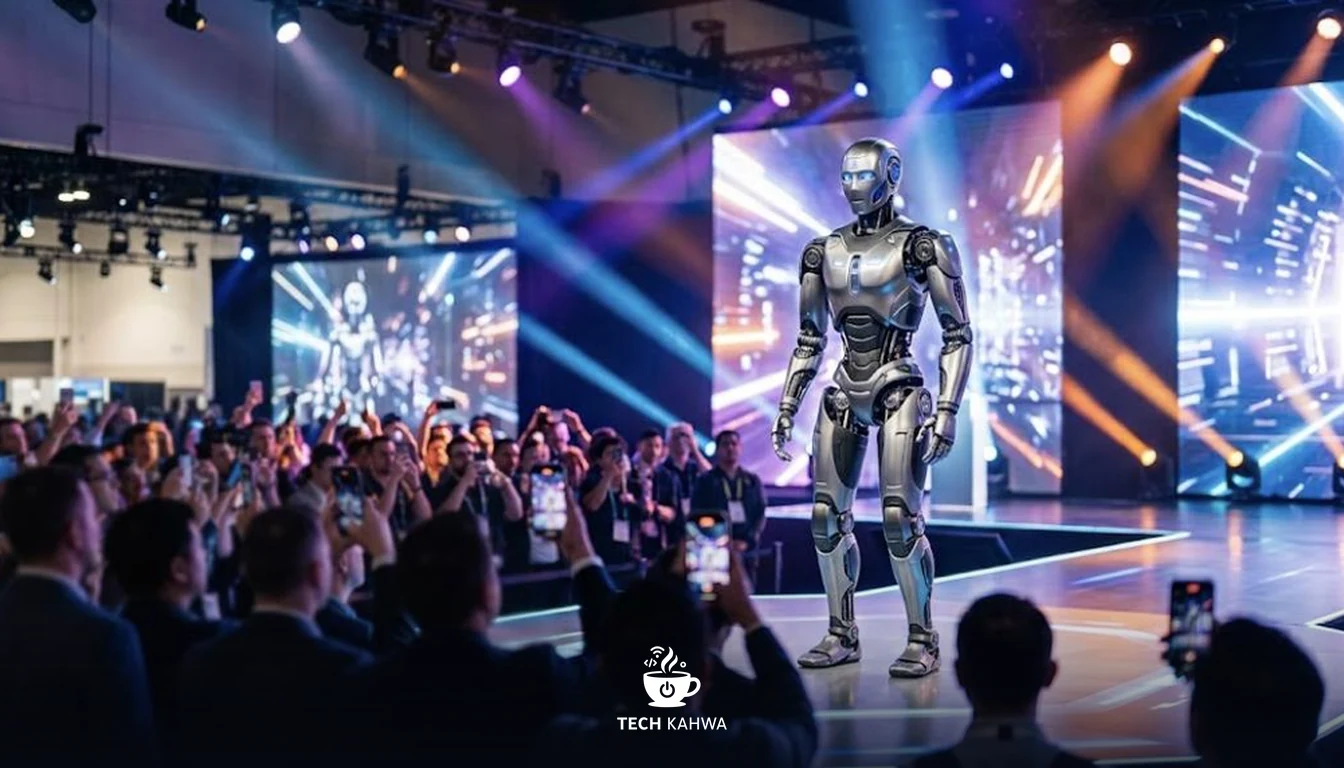
CES 2026 opened in Las Vegas on 6 January and runs until 9 January, spread across 13 venues with more than 4,100 exhibitors, according to the Consumer Technology Association (CTA), which organises the show. Two themes dominate the floor this year: AI PCs, led on the chip side by AMD, and robotics.
The size of the show
The CTA’s opening day release gives the scale. Exhibitors are spread over 2.6 million net square feet across 13 venues, including a renovated Las Vegas Convention Center (LVCC), and there are more than 400 conference sessions on the programme.
Numbers like these are hard to feel from a distance, so here is the practical version: nobody sees all of CES. Every visitor, and every journalist, ends up with a narrow slice of it. What gets remembered is whatever the biggest names chose to push, and this year the company that set the tone for PCs was AMD.
AMD bets on AI at every size
AMD’s Lisa Su unveiled three products at CES, according to the CTA:
- Ryzen AI 400 Series, processors for AI PCs.
- MI440X, a GPU.
- Ryzen AI Halo, a new product under the Ryzen AI name.
The spread is the interesting part. In one appearance, AMD put PC processors and a GPU side by side under the same AI banner. The message I took from it is that AMD wants developers and buyers to see one AI story across its products, from the machine on your desk upwards, rather than a set of unrelated launches.
“AI PC” is a label that has been stretched a lot, so it is worth being clear about what it usually means: a computer designed to run AI models locally, on the device, instead of sending every request to a remote server. The benefits, when they are real, are speed, privacy and the ability to work without a connection. The cost is that software has to be written to take advantage of the hardware, and that part is always slower than the chip launches.
Su’s appearance also came with a commitment that has nothing to do with benchmarks. AMD pledged “$150 million to bring AI into more classrooms and communities”, the CTA reported. The release does not break down where that money goes, so I will wait for details before judging it, but it is a notable number to announce from a trade show stage.
By the numbers
| Item | Figure | Source |
|---|---|---|
| Show dates | 6 to 9 January 2026 | CTA |
| Venues | 13, including the renovated LVCC | CTA |
| Exhibitors | More than 4,100 | CTA |
| Exhibit space | 2.6 million net square feet | CTA |
| Conference sessions | More than 400 | CTA |
| AMD commitment for AI in classrooms and communities | $150 million | CTA |
| CTA forecast for US consumer tech revenue in 2026 | $565 billion, up 3.7% | CTA |
Robots, and the forecast behind the show
Robotics is the other theme that keeps coming up this week. It is the part of CES that photographs best and that is hardest to judge from a stage demo. A robot that performs well for a few minutes in front of a crowd is a different thing from one that works in a home or a warehouse every day, and I would keep that distinction in mind with every video coming out of Las Vegas this week.
Behind the spectacle sits the CTA’s own forecast: US consumer technology revenue of $565 billion in 2026, up 3.7%. That is growth, but steady growth, not a boom. It suggests the industry is counting on AI features to keep people upgrading devices, rather than expecting a sudden jump in spending.
Why it matters for readers in the Arab world
The CTA forecast covers the US market only, so it says little directly about demand in the Gulf, Egypt or the Levant. What does travel is the product direction. When AMD builds a new generation of PC processors around AI, many laptops reaching shops across the region in coming product cycles are likely to carry those chips, whether buyers ask for AI features or not.
For developers in the region, the more useful signal is local AI. If more everyday PCs can run models on the device, apps can offer AI features without relying on a cloud connection or sending user data abroad. That matters in markets where connectivity costs vary and where data residency is a growing concern. Pricing and regional availability for the new AMD chips were not part of the CTA release, so those are questions for the laptop makers.
What to watch
- The rest of the show floor until CES closes on 9 January.
- Laptop and desktop makers announcing systems built on the Ryzen AI 400 Series.
- Details of how AMD’s $150 million commitment will be spent.
- Whether the robots shown on stage come with real shipping plans, prices and dates.
Sources
- Consumer Technology Association (CTA), Innovators show up as CES 2026 opens today, 6 January 2026, https://www.ces.tech/press-releases/innovators-show-up-ces-2026-opens-today